…and how they resonate with the present moment
Introduction
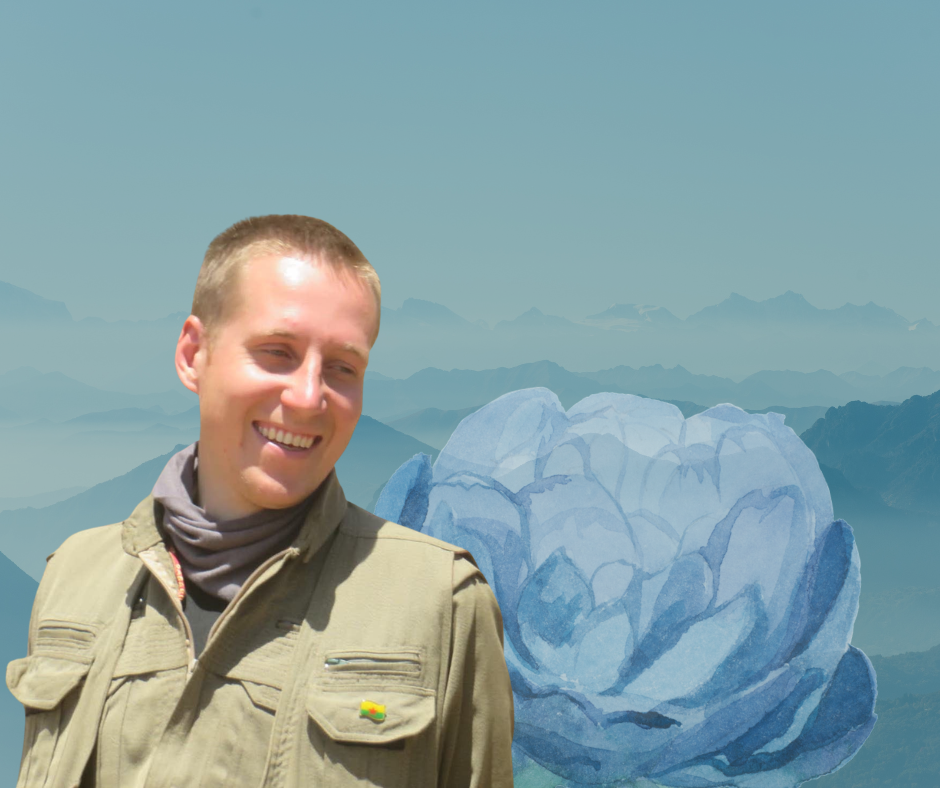
Right now, we are living a war that is as much a war of information as it is a military war. Not being influenced by the misinformation that many media outlets across the world are spreading, is crucial for democracy and freedom to prevail. To illuminate why this matters, we share thoughts about a text by Şehîd Bager Nûjiyan (Michael Panser) and reflect on how his ideas resonate with the present moment. In Power and Truth: Analytics of Power and Nomadic Thought as Fragments of a Philosophy of Liberation, Şehîd Bager examines systems of thought, or “regimes of truth“, their entanglement with power, the ways in which truth can be weaponized as a form of special warfare, and how we can resist against this. As defending the women’s revolution against jihadist fascism also means fighting for the truth, defending the women’s revolution means mental self-defense against ways of thinking designed to weaken our belief in freedom and collective victory. With this intention, we invite you to delve into our reflections on the current war of information, inspired by Şehîd Bager’s ideas on power and truth.
On Power and Truth (Şehîd Bager)
In Power and Truth, Şehîd Bager addresses two closely connected questions that help us understand both current social conditions and the possibilities for meaningful action. First, he examines how systems of thought — what Rêber Apo (Abdullah Öcalan) calls “regimes of truth” — function. Second, he explores how these regimes are intertwined with power and what kinds of resistance they allow. His reflections invite us to consider how we come to understand reality, how this understanding shapes our ability to act, and how power runs through both processes.
Systems of Thought: “Regimes of Truth”
All thinking takes place within a particular way of understanding the world. How we perceive and interpret reality is shaped by the ways our minds have been socialised. These patterns of understanding influence how we organise our daily lives. Through this ongoing process, meaning is produced. The meanings we assign to what we perceive guide our decisions, establish norms and expectations, and are constantly revised through experience and reflection.
Whether we speak of individuals, collectives, or entire societies, every subject carries its own experiences. By reflecting on lived reality, change becomes possible. Every action we take is therefore rooted in a specific form of awareness: the ability to situate ourselves within reality and make sense of it. Rêber Apo describes this process as taking place within “regimes of truth”.
What we perceive, analyse, and interpret in order to guide our actions is never truth in an absolute sense, but rather an approach to truth. We engage with fragments of reality, test them through experience, and filter and interpret them until we accept them as true. For example, we perceive strawberries as red and edible, and by repeatedly interpreting strawberries as red and edible, we come to regard the statement “strawberries are red and edible” as true. Over centuries, the differentiation of societies has produced a plurality of such approaches. Social life thus unfolds as an ongoing negotiation between competing regimes of truth. This diversity is precisely what enables creativity, transformation, and social change.
Systems of Thought and Their Relation to Power
Our understanding of a situation opens up certain possibilities for action while closing off others. In this sense, power can be understood fundamentally as the ability to act, as agency. Every person possesses this capacity. Power in itself is neither inherently good nor inherently evil. It is not only embodied in distant figures such as kings, police officers, or God. Rather, these figures are effects of concentrated power, shaped by particular interpretations of reality. Power emerges everywhere within society. It circulates, structures relationships, and permeates social life. In this sense, power is omnipresent.
On the one hand, power refers to an individual’s ability to move within a system, to create frameworks of meaning, and to act on them. On the other hand, contemporary societies are deeply shaped by power relations: they organise themselves around hegemonic ambitions, accumulation, access to power, and the ability to impose meaning on others.
Power as Oppression
Power becomes oppressive when a particular position within the system — whether an individual, a party, a state, or an institution — forces its framework of meaning onto others. When this imposed framework is rejected, the response is often exclusion, repression, or violence. An example of this is Kurdish society: for centuries, nation-states such as Turkey have sought to impose a framework of meaning in which Kurds do not exist, but where there is only one nation, one language, and one culture within a single nation-state. This has led to the exclusion and repression of the reality and lived truth of Kurdish people. Domination deprives parts of society of their agency, and aims at reducing them from active subjects to passive objects.
Such domination requires specific methods and tactics, especially those that disconnect individuals from their own sense of truth. Because power is inseparable from knowledge, and because agency is closely linked to consciousness and access to truth, any project of domination must attempt to establish its own regime of truth as absolute. It presents this regime as normal, universal, and beyond question.
This is clearly visible in the current war in Syria. Nation-states construct their regimes of truth by portraying the nation-state as inevitable: as the only possible way of organising society, as if society and state were identical, and as if no society could flourish without a state. As a result, a conflict that is fundamentally about women’s revolution and the self-determination of peoples, in opposition to jihadism and fascism, is reduced to a conflict between nations — specifically Arabs versus Kurds. For example, Al Jazeera recently broadcast footage of a statue of a YPJ fighter in Tabqa being taken down and subtitled it: “This is what the unification of a country looks like.” This framing vividly illustrates how state-aligned media attempt — despite the explicitly misogynistic symbolism used by jihadist forces — to reduce the war to a nationalist conflict between a “legitimate” nation-state and a nation allegedly threatening its unity.
The regime of truth promoted by state media such as Al Jazeera not only strips people, and especially women in the DAANES, of their agency, but also distorts clear symbols of violence against women. Acts such as destroying statues of women or cutting their braids are reframed as nationalist gestures rather than what they are: attacks on women and women’s liberation. States seek to force this conflict into their own narrative because an accurate explanation would require presenting the political perspective of the revolution. Doing so would directly challenge the dominant state truth regime — especially in societies where the dogma prevails that social life must be organised through the state and that no other form of coexistence is possible.
Power and Us
In this struggle between different regimes of truth, we are never situated outside power relations. Our consciousness and ways of living are shaped by ongoing struggles to meet our needs and gain recognition within society. In this sense, we become subjects through power itself. Resistance, therefore, cannot begin from an imagined position of purity or total independence from power.
State and system-aligned media have a clear interest in forcing the war in North and East Syria into their own regime of truth, precisely to prevent people from joining the resistance. Their aim is to obscure the historical significance of this struggle for everyone who seeks a dignified life. Within their truth regime, there is no women’s liberation and no democratic nation. To prevent people from finding meaning in these ideas, they work to make them invisible.
Effective resistance requires an understanding of history. Rêber Apo’s approach to history seeks to reveal the long-term processes through which societies have been disempowered and to reopen access to truth in ways that make strategic resistance possible. Resisting statist regimes of truth demands us to give meaning to the long history of people fighting for alternative forms of truth, especially the truth of women’s liberation and democracy.
Special Warfare
“Special warfare” refers to the full range of state techniques that weaken society by producing truth-effects that penetrate every sphere of life. This includes state-aligned media, architecture, strategic institutions such as prisons and hospitals, bureaucratic administration, policing, and the shaping of the public sphere itself. As an umbrella term, special warfare describes tactics designed to establish the state’s regime of truth while erasing all alternative ways of thinking. This is achieved through the constant promotion of dominant paradigms — consumerism, nationalism, militarism, hostility, and liberal or feudal behavioural norms — which function as tools of socialisation.
In the current war, we see how the conflict is explained through nationalist narratives rather than through the values for which people are actually fighting. Moreover, by refusing to show that women are the primary targets of groups such as HTS, system media reinforce patriarchal paradigms. The near-total absence of women’s lived reality in reporting on this war is itself an act of violence and a deliberate attempt to uphold a regime of truth in which women’s liberation has no place.
The goal of state-aligned forces is to impose a fixed understanding of the world through dogma, law, and rigid truth regimes, creating epistemic monopolies. A society seeking liberation from the state must therefore develop a genuinely socialist mentality in opposition to state domination. This involves a self-empowering way of life, grounded in the continuous development of perception and collective agency.
The utopia of democratic confederalism represents such a project. Comparable in principle to the Zapatista movement in Mexico, it responds to the failures of earlier socialist experiments by prioritising self-government and self-administration beyond the state. As Rêber Apo writes: “Those who want to lead themselves must philosophise; those who want to philosophise must address the truth.”
Resistance to special warfare in Rojava shows how this paradigm can take concrete form. Philosophy and tools of self-awareness are shared and collectivised through a highly developed academy system. Each social group organises itself according to its concerns, field of work, or identity, and develops its own academy. The people of North and East Syria have built education systems to learn their own history and truth, as well as democratic media outlets to present their reality to the world. In doing so, society creates its own framework of meaning beyond the reach of the state.
Conclusion
The struggle for self-liberation, grounded in an understanding of one’s own situation, history, possibilities, hopes, and desires, is a core element of any socialist project. This awareness is especially important in Western and Central Europe, where state dominance is deeply embedded in collective worldviews and resistance remains fragmented. For this reason, we must critically examine which media we consume, educate ourselves about the history of democratic movements, and understand the close relationship between power and truth. All forms of state-centred thinking must therefore be systematically exposed and challenged. Organised thought requires flexible methods, self-awareness, and ideological clarity. Above all, it demands that we recognise our own room for manoeuvre, creativity, and capacity to act.
In this war in particular, the distortion of truth functions as a major instrument of power — used to demoralise us, to make us feel weak, and to strip the struggle of its meaning. Let us therefore build our collective self-defence against special warfare. Let us defend the women’s revolution both physically and mentally. Let us give meaning to this struggle, which is a universal one, that is not fought for one single nation but for every freedom-loving person on this planet!